
Online scams are becoming more sophisticated, and it’s important to stay alert. Fraudsters may impersonate Treatwell via messages, emails, or phone calls to try and access your account or financial details. These scams can look convincing — but there are clear warning signs to watch for.
Here’s how to stay safe.
What actions should I take to keep my Treatwell account safe?
Don’t click on suspicious links or open unexpected attachments.
Treatwell will never ask you for your password. Never share your Treatwell login, passwords with anyone.
Treatwell will never contact you via WhatsApp, SMS, or phone to ask for sensitive information, transfer your account, or offer financial products
If anyone contacts you asking to confirm or change your IBAN/SWIFT or bank details, always double-check with us through official Treatwell support. Hackers aim to redirect payments - don’t give them the chance. You will get an email from Treatwell if bank account details are changed. Please look out for it and act immediately if it was not you who changed it.
If you’re ever unsure, it’s best to pause and check before taking action. For more information on how to protect yourself from scams, take a look here.
What should I do if I receive a suspicious message?
Look out for poor grammar, strange-looking links, or unfamiliar email addresses — these are all red flags. Examples of fraudulent sources and emails we have encountered:
press@treatwel.com
+442033752327
Phone numbers in the 020 3478 890X range
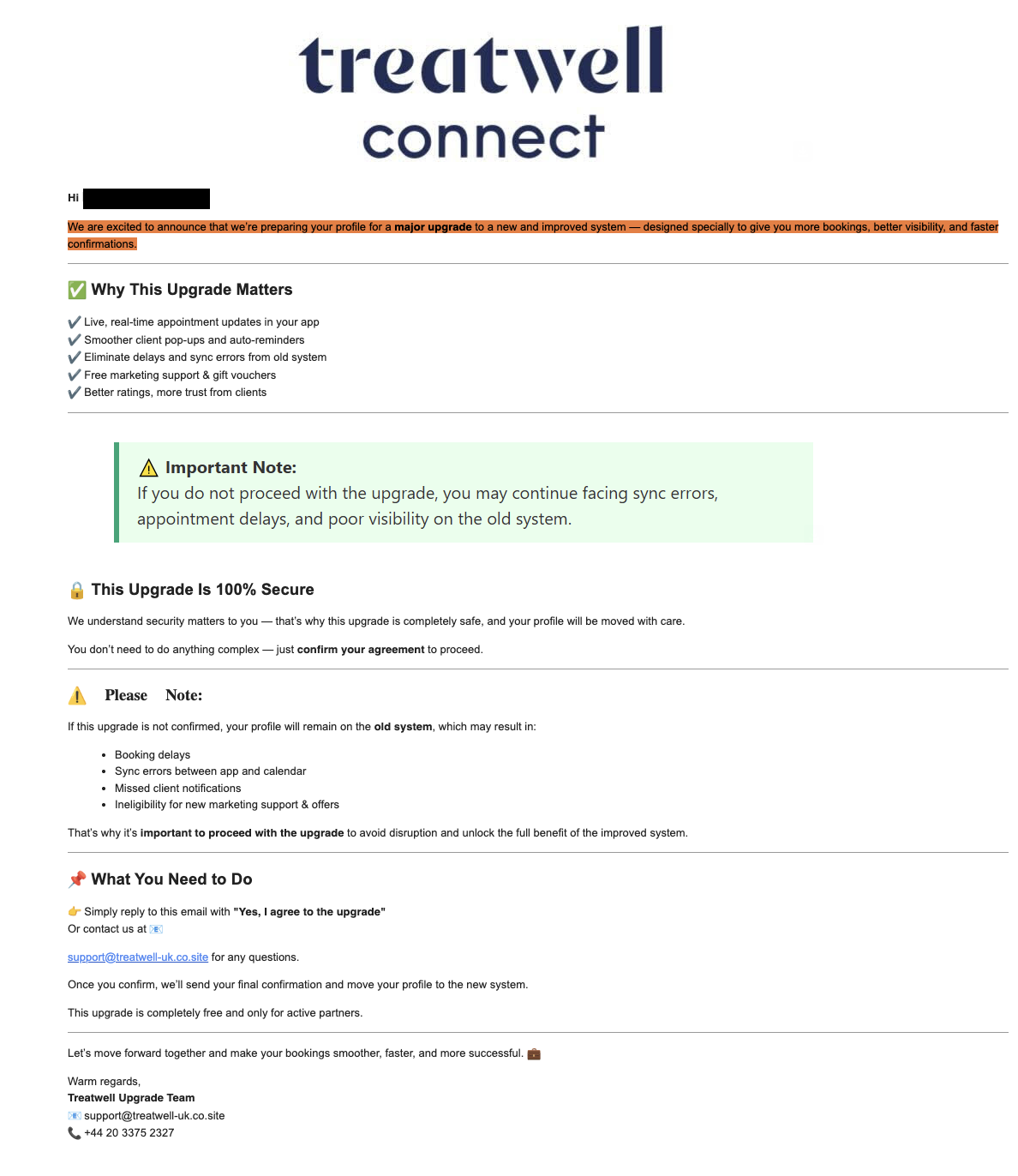
If you get a link via WhatsApp or SMS, do not reply, click on any links, or open any attachments.
Report it to us directly via the “Get help” button in your Treatwell Connect account. Our team will investigate further.
Should I reset my password?
As a precaution, we recommend resetting your Treatwell Connect password, especially if you clicked on a suspicious message or shared any details. We recommend choosing a strong, unique password that you don’t use anywhere else. Regularly updating your password is one of the best ways to protect your account.
Remember to never change your password to a password that has been suggested to you on the phone or via email.
What are the warning signs of a scam?
Scams often come with a sense of urgency — like pressuring you to act quickly, pay immediately, or “verify” something.
If something doesn’t feel right, trust your instincts. Be wary of messages asking for:
Personal or financial information
Login details
Asking you to change your login details
Directing you to change your login details to a specific password
Immediate payments or urgent requests
Links from unfamiliar numbers or email addresses
How does Treatwell contact me safely?
All identity verification is done securely inside your Treatwell Connect account via our trusted partner, Stripe. We’ll never contact you through WhatsApp or SMS asking for account info.
You’ll only receive official messages from email addresses ending in Treatwell domains, and we only link to official websites like:
What should I do if I think I’ve been targeted?
If you’ve received a suspicious message
For the UK:
If a message or call doesn't feel right, trust your gut. Don't click any links, don't download attachments, and never hand over personal or financial info. Please contact us via the "Chat Support" option in Connect if you have any concerns.
Here is exactly how you can report these scammers directly to the official UK authorities, keeping your Treatwell account secure.
📧 Emails
Scam emails can look incredibly real. Be cautious if an email pressures you to act fast, asks for money, or just feels off.
Do not reply to the sender, and don't click any links.
Forward the suspicious email straight to the UK's Suspicious Email Reporting Service at report@phishing.gov.uk.
📱 Texts (SMS)
Reporting these helps your mobile network investigate and block malicious senders.
Copy the sender's number from the text.
Forward the actual message to 7726 (this is free).
When you receive an automated reply, paste and send the phone number you just copied.
📞 Phone calls
If you receive a fraudulent call (like someone pretending to be from Treatwell requesting sensitive information), here is how to handle it:
Mobile: Copy the number from your recent calls. Start a new text message to 7726, type the word "Call" followed by the number, and send it.
Landline: Contact your landline provider directly to find out how to report the number and get it blocked.
Withheld numbers: Contact your mobile network or landline provider for their specific advice on reporting withheld numbers.
Lots of us use WhatsApp to chat with clients. If a scam or phishing message slips through:
Press and hold the suspicious message.
Hit Report, and follow the prompts.
You can also stop them from contacting you again. Just tap the contact's name at the top of the chat, scroll down, and select Block.
🚨 Already clicked a link?
It happens to the best of us. Try not to panic. If you think you've accidentally engaged with a scammer, clicked a malicious link, or suffered a financial loss, act quickly.
Call 0300 123 2040 immediately to report the incident to the official Cyber Crime & Fraud Reporting Centre, and contact your business bank directly to secure your salon's accounts.
For Ireland:
If a message or call doesn't feel right, trust your gut. Don't click any links, don't download attachments, and never hand over personal or financial info. Please contact us via the "Chat Support" option in Connect if you have any concerns. Here is exactly how you can report these scammers directly to the official Irish authorities, keeping your Treatwell account secure.
📧 Emails & 📞 Calls
Scam emails and calls can look and sound incredibly real. Be cautious if you are pressured to act fast, asked for money, or if it just feels off.
Do not reply to the sender or caller.
Text fraudulent numbers to 50100 to report them or contact your mobile network provider.
Report cybercrime and online scams directly to your local Garda Station (An Garda Síochána).
📱 Texts (SMS)
Reporting these helps your mobile network investigate and block malicious senders.
Copy the sender's number from the text.
Forward the actual message to 50100 (this is free).
Lots of us use WhatsApp to chat with clients. If a scam or phishing message slips through:
Press and hold the suspicious message.
Hit Report, and follow the prompts.
You can also stop them from contacting you again. Just tap the contact's name at the top of the chat, scroll down, and select Block.
🚨 Already clicked a link?
It happens to the best of us. Try not to panic. If you think you've accidentally engaged with a scammer, clicked a malicious link, or suffered a financial loss, act quickly.
Call 1800 666 111 immediately to report the incident to An Garda Síochána, and contact your business bank directly to secure your salon's accounts.
If you’ve been scammed
We’re really sorry this has happened — we understand how upsetting and stressful it can be. If you believe you’ve been scammed, here’s what to do:
Change your password on Treatwell Connect immediately to secure your account
Check your bank details in Connect to make sure they’re still correct and haven’t been changed
Contact us via the Chat in your Treatwell app by clicking "Get Help"
We’re here to support you and will also raise this with the police using your reference number, to help with the investigation
We’ve got strong security measures in place — but staying vigilant is key. If in doubt, reach out.
Was this article helpful?